Development of Children & Young People
“THE LAMP” GUIDES YOUNG PEOPLE TO VOCATIONAL COURSES AND EMPLOYMENT
Right now there is a mismatch between the world of school and working life – and it is young people from disadvantaged areas who are missing out the most. Lampan – “The Lamp” – is a project initiated by non-profit organisation Fryshuset which hopes to mitigate this by specifically helping young people to find employment.
For some young people, the path from school to working life is neither straight nor simple. According to a 2018 report from the Swedish Children’s Ombudsman, for example, four in ten early teenage boys living in the suburbs expected to find it difficult to get work. The 2019 unemployment report from Akademikernas A-kassa – an unemployment insurance fund for university graduates – also describes a mismatch in the labour market: many people not in employment have no qualifications from upper secondary school, while employers are seeking increasingly well-qualified workers. The Lampan project, organised by Fryshuset, focuses on the path for young people from school to working life.
“The Lampan project is special because it started during the pandemic, when a broad group of young people were at risk of ending up not in employment, education or training. Many had found it difficult to keep up with online learning at upper secondary school, and in addition all the entry level jobs disappeared at a stroke,” says Katarina Nilsson, national project lead for working life and entrepreneurship.
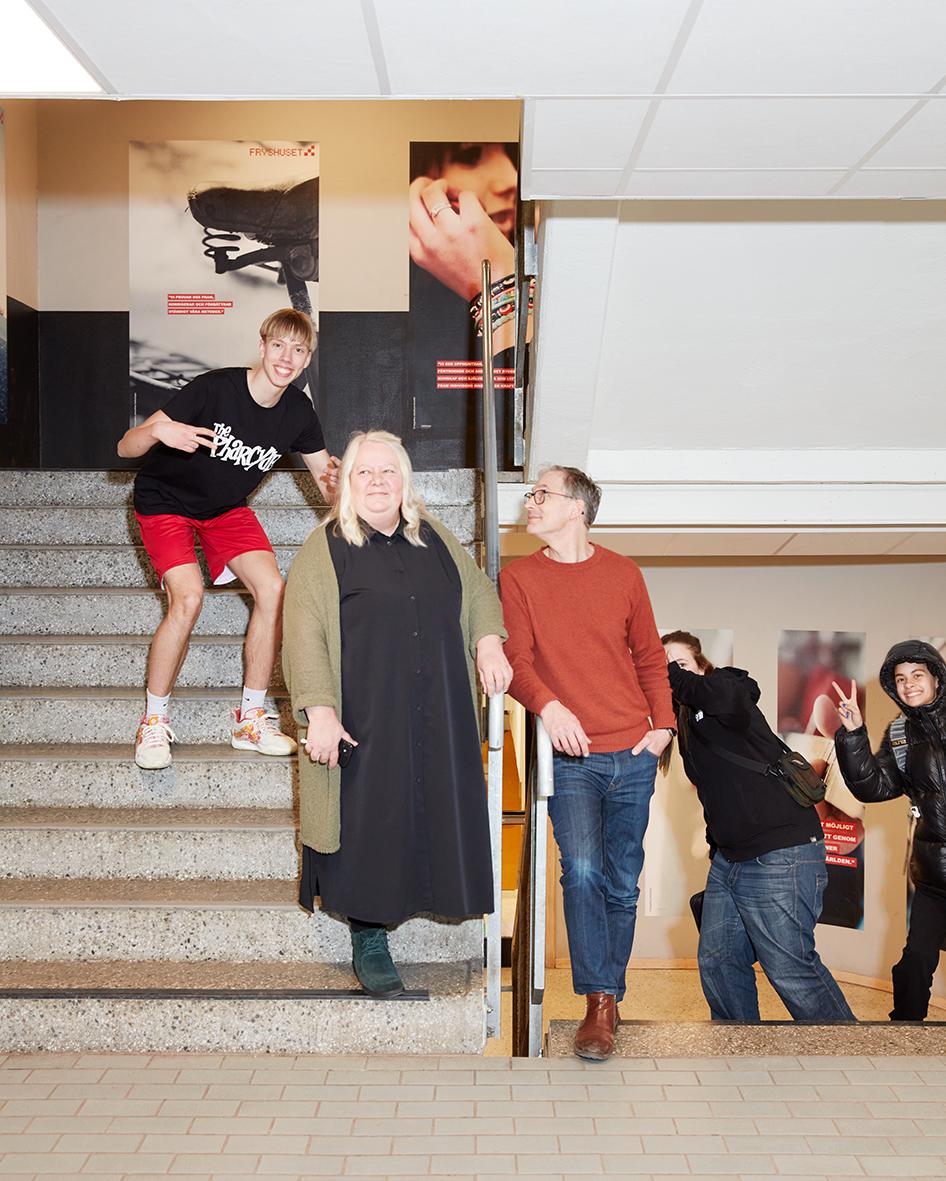
As part of the project a digital careers guidance centre that is available across the country has been created. The idea is to bridge the gap that can exist between efforts by careers advisors at school and the labour market.
“We wanted to solve the urgent problems brought about by the pandemic, so that young people would get to meet a careers advisor if they needed to or quickly get help with registering with the adult education service to catch up on the maths that they missed,” she says.
Johan Oljeqvist, Fryshuset’s CEO, adds some detail:
“And we quickly decided that we would be open to anyone who wanted to come – from those who had experienced only minor problems with teaching being online to young people who are socially excluded,” he says.
They started the project without knowing when the pandemic would release its grip – and so had to set up digital solutions, explains Katarina Nilsson.
“We also went out into the schoolyards at upper secondary schools to provide information about what we were doing. As time has gone on, we’ve begun using physical meetings. We are constantly evaluating our activities. When it comes to meeting with a careers advisor, digital meetings work well for most people – except for those we meet who have the least trust in society. Then you need to meet in the same room, so that you can see people’s body language,” she says.
"Vi har lärt oss vad vi ska göra och hur, oavsett pandemi. Vi har också insett vikten av att jobba brett, eftersom vi har en så heterogen målgrupp."
One thing that has worked well is the 60 or so inspirational talks that have been organised, where individuals that young people can identify with talk about their journey into their career or to the position they have today.
“This kind of storytelling really speaks to young people. For example, it might be a girl with a foreign background who has established a position for herself within the tech industry and her route there,” she says.
Once the project had been running for 22 of its total 30 months they compiled the results: more than 4,300 young people had met with a mentor or a careers advisor, and just over one in ten had subsequently enrolled for further studies. More than 21,000 hours had been spent on education, coaching and practical activities with young people. And 112 young people outside the system – “young people not in education, employment or training” – had received guidance. Just over 2,400 young people had drawn up a functional CV and 173 study visits to industry had been carried out.
- 4,500
The number of young people that have come into contact with the project at the time of writing.
- 20%
The percentage of those who started upper secondary school in autumn 2017 but left five years later without completing their education or fully graduating, according to the Swedish National Agency for Education.
- 1 in 10
The number of those contacted who have so far taken up some kind of vocational education, training or work.
“Now a total of 102 young people have got a job with us, while 317 have got a job with an external party through us,” says Katarina Nilsson.
Within the project, 51 projects run by young people themselves have also engaged nearly 800 youngsters. One example highlighted by Katarina Nilsson is 19-year-old Noelia in Gothenburg, whose attention they caught during their outreach work at upper secondary school. In Year 9 she became interested in sewing.
“When the more academic subjects were heavy going, the needlework room was somewhere she could breathe. Now we have a fully equipped sewing studio and she’s amazing,” Katarina says.
Today Noelia teaches others to sew; they recycle fabric and sew items such as hairbands.
Another group that can be overshadowed by urban youth but that is also important to reach are ’young rural white males’.
“The girls move away, the guys are left behind and it’s a fertile ground for sexism and racism,” says Katarina Nilsson.
In Torsås, between Kalmar and Karlskrona, tinkering with cars is a popular pastime for many young people and they themselves took the initiative for a car boot sale.
”Extrajobb är lätta att glömma bort eftersom de är just ’extra’, men vi har förstått att de innebär ’extra allt’.”
“Car parts are expensive, but at the car boot sale they could swap a carburettor with someone else – as well as getting some money in their pockets from other things that they sold. But because the problem will recur, our goal is to have the expertise and structure in place so that together with their mentors they can plan something that is financially sustainable in the longer term – maybe a car café, road trip bingo or who knows what,” says Katarina Nilsson, continuing:
“In both these cases the Lampan project has provided substance for the next project application, with young people creating their own jobs and with entrepreneurship as an important factor. In a job market where ’permanent employment’ doesn’t mean the same as it did for my generation, and where contract work and the gig economy are the norm, young people need to identify their own entrepreneurial abilities if they are to find the best way through.”
The Lampan project has now been going for two years.
“We’ve learned what we need to do and how, notwithstanding the pandemic. We’ve also realised the importance of working on a broad front – because the target group is so diverse,” says Katarina Nilsson. One thing that she highlights is the importance of giving young people a chance to do casual jobs.
“It’s easy to ignore casual work because it’s only casual, but we’ve realised that it’s vital. It’s so important for getting young people to understand what a job is and what opportunities are out there,” she says.
Johan Oljeqvist agrees.
“In our generation it was normal to have a summer job, but that’s not how it is today. The jobs on offer can even be destructive, like young people being paid for doing nothing,” he says, continuing:
“In the activity Action: X Factor, which was developed within the Lampan project, we want to ensure that the companies and the public sector make these kinds of casual jobs available to a wider target group than normal.”
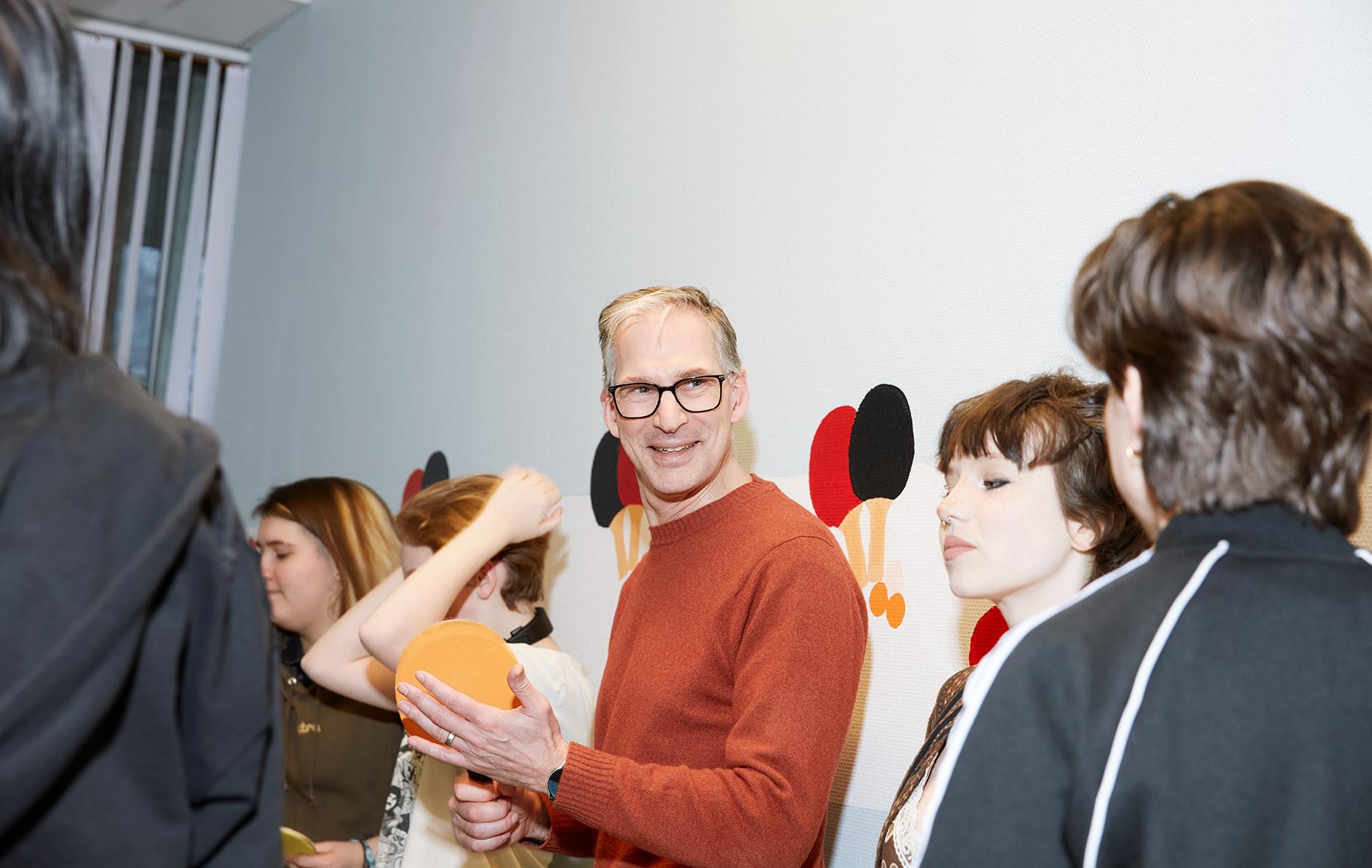
Johan Oljeqvist says that the financial support from the Erling-Persson Foundation has been very valuable.
“We already knew that when times are hard, such as when there is a pandemic or a recession, two or three year-groups of young people are at risk of ending up excluded. Without the Lampan project, they would not have been exposed to the opportunities that actually exist,” he says.
Katarina Nilsson highlights another aspect: the socioeconomic benefit.
“We are in the process of calculating this – but I would guess that for each krona invested, our work returns three times that to society,” she says, continuing:
“Every hour that we spend with young people, allowing us to influence their future choices so that they choose to contribute as taxpayers or to do good for others in another way, means that society gets something back – and that investment must not be forgotten.”
Om projektet
Title: Lampan (The Lamp) is an acronym for learning, ambition, motivation, planning, adaptation, navigation.
What it involves: Building up a study and careers guidance centre for young people and young adults that can be accessed remotely from anywhere in the country. The aim is to make realistic routes into employment, education or training visible to young people.
Who: Katarina Nilsson, national project lead for working life and entrepreneurship, and Johan Oljeqvist, CEO of Fryshuset.
Funding: The Erling-Persson Foundation is supporting the project with a total of SEK 15 million over 30 months, 2020–2023.


